Audiobooks vs ebooks vs print: which is best?
Listening, reading on a screen and turning paper pages all count as reading. Each has its own strengths. Here is how to choose the right format for each moment.
On this page
Should your child listen to a book, read it on a tablet or hold a paper copy? Should you? The honest answer is that all three are valuable, and most families do best with a mix. This guide compares audiobooks, ebooks and print books in plain language, so you can pick the right format for each situation.
Quick comparison
| Audiobooks | Ebooks | Print books | |
|---|---|---|---|
| How you take it in | Listening | Reading on a screen | Reading on paper |
| Best for | Car trips, chores, bedtime, tired eyes | Travel, adjustable text, instant access | Young children, picture books, sharing |
| Helps with | Vocabulary, listening, story comprehension | Reading practice with adjustable fonts | Reading practice, focus, shared reading |
| Hands free? | Yes | No | No |
| Free from the library? | Often, through apps like Libby | Often, through apps like Libby | Yes |
Audiobooks
An audiobook is a recording of someone reading a book aloud. You can listen through a phone, a smart speaker, a tablet or the car stereo.
Strengths
- Builds vocabulary and listening. Children hear words, expressions and story structures that may be above their own reading level.
- Brings stories to life. Good narrators use voices and timing that make stories exciting.
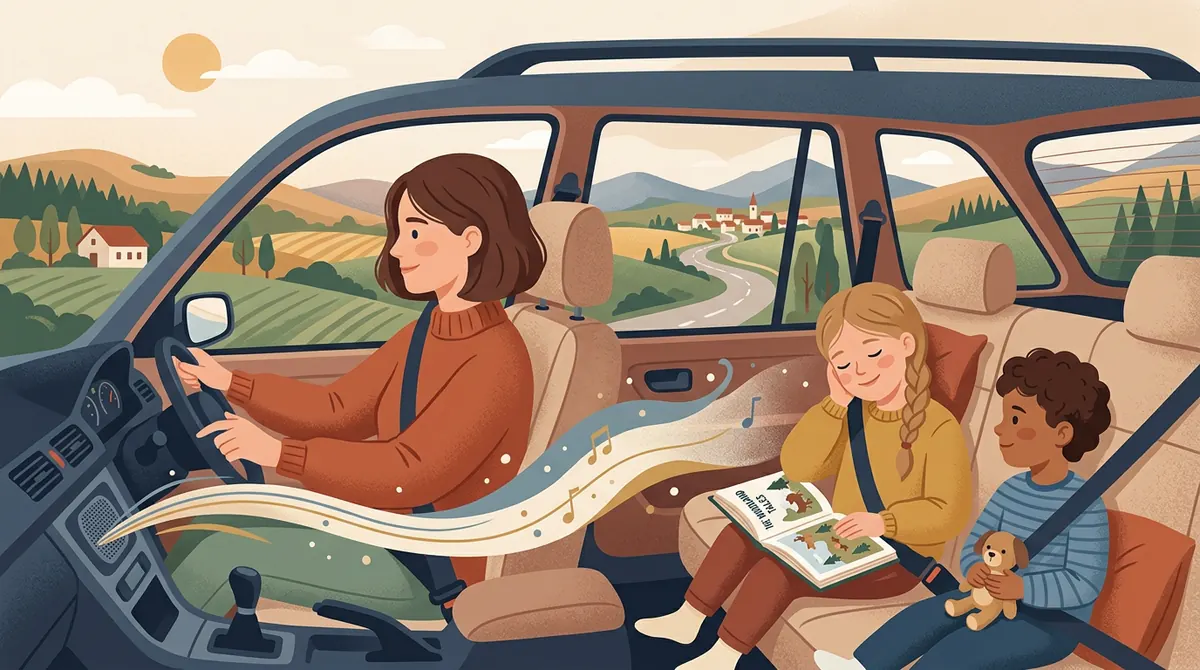
- Hands and eyes free. Perfect for car rides, folding laundry, drawing or winding down at bedtime.
- Helps struggling readers enjoy books. Children who find decoding hard can still enjoy the same stories as their friends. Many families find this keeps a love of books alive. See how to help a reluctant reader.
Limits
- Listening does not practice decoding words on a page, which young readers still need.
- It is easy to drift off and miss parts.
- Audiobooks can cost more than ebooks to buy.
Tip: Try listening while following along in a print copy or ebook. Seeing the words while hearing them can support reading skills.
Ebooks
An ebook is a digital book you read on an e-reader, tablet, phone or computer. Learn the basics in how ebooks work.
Strengths
- Adjustable text. You can make the font bigger, change the font style and add spacing, which helps young readers and anyone with tired eyes.
- Built-in dictionaries. On many devices, you can tap a word to see its meaning.
- Light and portable. A whole library fits in a bag, which is great for trips.
- Instant access. Buy or borrow a book in seconds, often at lower prices than print.
Limits
- Tablets and phones bring distractions like games and notifications. An E Ink e-reader has fewer. See how to choose an e-reader.
- Color picture books look best on tablets, not on most e-readers.
- Store-bought ebooks are often tied to one store's devices. Read DRM explained.
Print books
Paper books are still the format many families love most.
Strengths
- Best for young children. Babies and toddlers learn by touching, flipping and pointing. Picture books are designed for paper.
- Easy to share. Two people can look at the same page together.
- No screens or batteries. Great for bedtime and quiet time.
- Easy to pass on. Lend, swap, donate or resell.
Limits
- Heavier and bulkier for travel.
- New hardcovers can be expensive, though there are many ways to save. Our print site explains how to save money on books.
Which format for which age?
- Babies and toddlers (0 to 3): Print board books first. Short songs and rhymes as audio are a fun extra.
- Preschoolers (3 to 5): Mostly print picture books read together. Audiobooks for car rides.
- Early readers (5 to 8): Print or ebooks for reading practice, plus audiobooks for longer stories they cannot read yet.
- Older kids (8 to 12): All three. Let them choose. Audiobooks can keep a reluctant reader connected to books.
- Teens and adults: Whatever fits the moment.
See ebooks for kids for screen-time tips for younger readers.
Does listening count as reading?
Listening and reading are not exactly the same skill, but they share a lot. Both build vocabulary, background knowledge and understanding of stories. For children still learning to read, audiobooks are best as a partner to print or ebooks, not a replacement. For confident readers and adults, listening to a book is a perfectly real way to enjoy it.
How to get all three for free
Your public library is the best place to start. With a library card you can borrow print books from the shelves, and through apps like Libby you can borrow many ebooks and audiobooks for free. Our guide to free ebooks, legally explains how.
Our advice
Use the format that fits the moment: print for snuggling with little ones, ebooks for travel and adjustable text, and audiobooks for the car, chores and bedtime. The best format is the one that gets your family enjoying more stories together.
Questions
Are audiobooks good for kids?
Yes. Audiobooks build vocabulary, listening skills and a love of stories. For children who are still learning to read, use them alongside print books or ebooks.
Is reading an ebook as good as reading a print book?
For most older children and adults, both work well for reading practice. For babies, toddlers and picture books, print is usually better.
Can I get audiobooks and ebooks for free?
Many public libraries lend ebooks and audiobooks free through apps such as Libby. You need a library card from a participating library.
Should my child follow along in the book while listening?
It can help. Hearing the words while seeing them on the page supports early reading skills, and many children enjoy it.
Sources
Checked November 20, 2026.